
How to Nurture Leads as a Coach So They Buy Later
If your leads ghost you, tell you they can't afford it, or just want to pick your brain for free, this post is for you. I'm going to walk you through how to nurture leads as a coach, step by step, so the people already in your world start to trust you and come back ready to buy. No pushing. No chasing. Just a simple system that does a lot of the work before you ever get on a call.
Most of your leads are not ready to buy yet
Here's the thing a lot of coaches miss. Only about 3 to 5% of the leads you generate are ready to buy on that very first call. That's the industry average.
And so what does that mean? It means 95 to 97% of your leads need more time. Right.
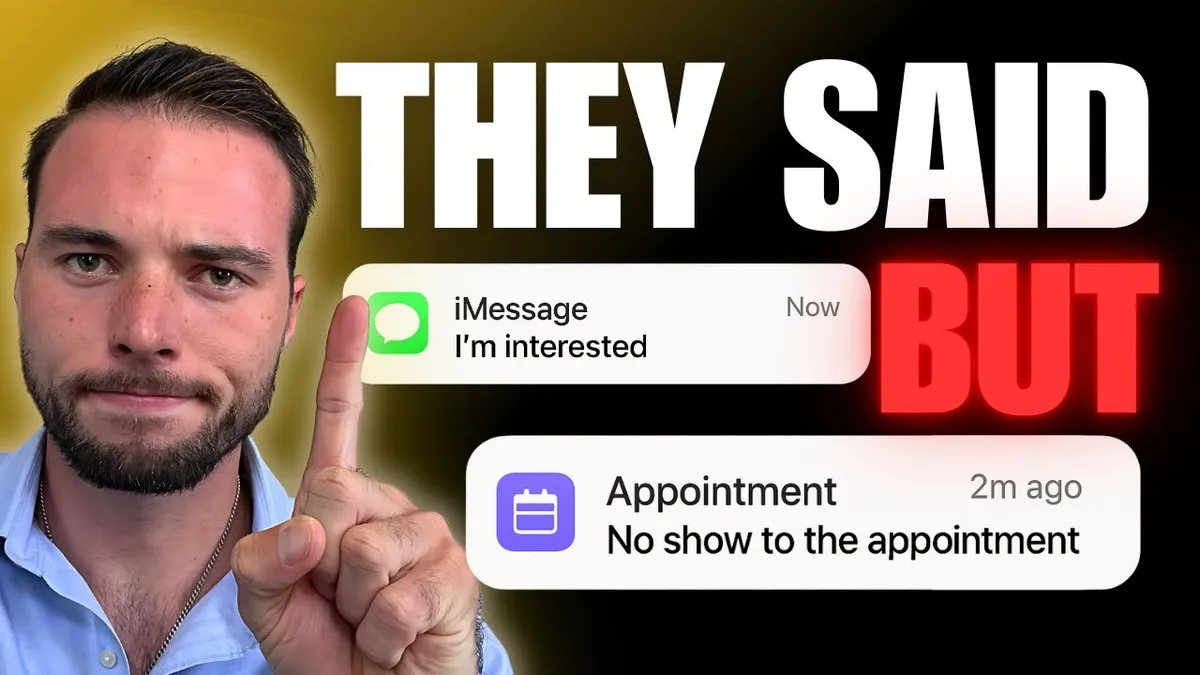
I talk to coaches all the time who say, "My leads are good. Why aren't they buying?" And the biggest thing is they walk into every sales call thinking, if I don't close this person right now, I failed. In high ticket coaching, most people won't say yes the first time they hear about you.
So the goal of nurturing is simple. Take more of that 95% and slowly move them toward being ready. Ideally on autopilot.
Want to go even deeper? Watch the full video.
The real problem is trust, not bad leads
Don't get me wrong. Your marketing could be off, and you could be getting bad leads. But for a lot of coaches, the leads are fine. They just don't trust you yet. You're brand new to them.
There are two reasons trust is low right now.
- People distrust a lot of things in general, and so they show up guarded.
- Online coaching has a reputation problem. A few bad people took money and didn't deliver. And everyone and their mother on social media says they can help. Older clients especially can link "online" with "scam."
So your job is to build a system that gets people to know, like, and trust you, and to see you as someone who can actually solve their problem.
The 7 11 4 rule: what it takes to become a client
Google did a study, often called the ZMOT study, looking at what a prospect goes through before they buy. The average they found was 7 hours of content, 11 touch points, and 4 different mediums.
- 7 hours: they consume about seven hours of your stuff before they feel good making a decision.
- 11 touch points: a few Instagram posts, a few YouTube videos, a few emails, a text, a phone call. That's not a set formula. It's just what 11 looks like.
- 4 mediums: YouTube, Instagram, LinkedIn, email, text, phone, an ad. Different places, not the same one over and over.
That's why one ad and one call is rarely enough.
Serve first, sell second
A lot of you might be thinking, "Chris, this is a business. I need to make money." I'm in full agreement with you. But my thought is, if you shift to serving people and giving real value, you will make more money, not less.
Look at Alex Hormozi. For years he gave away tons of value through videos and books and barely asked for anything.
This shows up in two places.
On your sales calls
Remember most people aren't ready to buy yet. So don't get attached. When someone isn't ready, don't burn the lead. Go ahead and get them inside of your world. Send them your YouTube videos, your free trainings, your emails. Get them consuming your stuff, so when they come back later, or when you reach back out, they're ready.
In your free content
A lot of coaches are scared that if they give away good stuff, nobody will pay them. It's the opposite. People only have a little bit of information to judge you on. If your free content is weak, what Hormozi calls "sucky fluff," people assume your paid coaching is weak too. Give away your real stuff. That's the reason they'll pay you.
If you want to see what goes into a good free training, I wrote about how long a free training should be and what to put in it.
How to nurture leads as a coach: 6 tactics
Now the tactical part. These are the pieces that do the nurturing for you.
1. A 3 to 5 email nurture sequence
Whenever anyone enters your world, an automation sends them a short series of emails. It tells them who you are and gives them value. The more of your stuff people consume, even free stuff, the better. If you don't have a list yet, start with how to build an email list as a coach.
2. A video sales letter (VSL)
A VSL is a video that can look like a free training. Inside of it, you share your background, the results you've gotten for people, and how your process works. It ends with a clear next step, like booking a call. People judge you on whether you seem good at what you do, so show them.
3. A thank you page with a video
When someone books a call, don't just say "thanks." Put a video on that page that explains who you are, what you'll cover on the call, and the biggest things that stop people like them. It builds trust before you ever talk.
And humanize yourself. You don't need to share your private life, but let people see you have one.
4. Retargeting ads
If you run ads, you can show a specific ad only to people who already raised their hand, like everyone who joined your free community. Show them client case studies, or a video that clearly explains your program, and ask them to book a call. You're paying to add touch points, hours, and mediums.
5. Warm-up content you can send in DMs
Keep a few YouTube videos, mini trainings, or podcast episodes ready to send by text, email, or DM.
6. Follow-up based on what the lead did
This is more advanced. Someone might see your landing page and never opt in. Someone might opt in and never book. Someone might book and not show. Each one stopped for a reason. So build a follow-up sequence for each stage. Shower the opt-in-but-didn't-book people with proof. If people apply and then stall, here's what to do when a lead applies but doesn't book a call.
Reverse engineer what a prospect needs to see before they buy, and put it in front of them on autopilot. Then on the call, they only have a few questions left.
The one mistake that kills conversions
The biggest mistake I see is assuming interest means intent.
Someone downloading your lead magnet doesn't mean they want to buy right now. Interest usually comes before intent, but it isn't the same thing.
Think about baseball. You can't swing for the fences every time you step up to the plate. Singles matter. Doubles matter. And so you need a place to put people who aren't ready, so they stay in your world.
I picture it like a big spiderweb. Wherever someone is, you want them caught in the web, and the web slowly moves them toward the middle, which is your high ticket coaching.
FAQ
How long does it take to nurture a coaching lead?
It depends on the person, but the 7 11 4 average gives you a guide. About seven hours of your content, 11 touch points, across 4 places. Some people get there in days, some take months.
What should a coach send in a nurture email sequence?
Start with 3 to 5 emails. Tell them who you are, give them real value, share proof of results, and point them to more of your content and a clear next step.
Should I keep following up with leads who said no?
Yes, as long as you're giving value and not just pushing. Get them into your emails, videos, and community. A lot of people come back once they trust you.
If you want to learn this with other coaches, join the free community here: join the free TD Coach community.